
See How Modeling and Simulation Is Used Across Industries
Multiphysics modeling and simulation drives innovation across industries and academia — as is evidenced by the many uses showcased in the technical papers and posters presented by engineers, researchers, and scientists at the COMSOL Conference each year.
Draw inspiration from the recent proceedings collected below, or, to find a specific presentation or filter by application area or conference year/location, use the Quick Search tool.
View the COMSOL Conference 2025 Collection

A numerical multiphase flow model is proposed to predict the behavior and motion of entrained inclusions in liquid steel, as they enter the orifice of a LiMCA (Liquid Metal Cleanliness Analyzer) sensor for assuring steel quality. The method of measurement is based on the electric sensing ... Read More

The actuation system of the deformable mirror is one of the crucial components of an Adaptive Optics unit. One possible implementation comprehends a linear force motor and a capacitive sensor providing the feedback measure signal. Choosing a magnetic circuit that makes optimum use of the ... Read More

In this work, a piezoelectric tactile sensor will be designed and simulated using COMSOL Multiphysics®. The sensor is designed in order to assess the pressure exerted on the human body while the robotic surgery is performed. The sensor consists of a rigid and compliant cylindrical ... Read More

Calorimetry is the method of choice for determining one of the most elementary physical quantities: heat, Q [in J]. Depending on the individual issue a wide range of techniques, devices and methods are available for users [1]. One approach is called isothermal microcalorimetry (IMC). It ... Read More

Wind speed measurement is a very important factor in various fields such as aeronautics, meteorology and farming. The conventional wind sensor comprises of small mechanical apparatus such as propeller and cup anemometers, or consists of thermal element such as hot wire anemometers, or ... Read More

Surface acoustic wave gas sensors use a chemically sensitive resistive layer to detect gas concentration. The resistivity of the sensing material, the sensing layer thickness, and the spacer layer thickness all affect the surface wave propagation velocity. Existing analytic theory ... Read More

Carbon Steel pipes are used as feeder pipes in Pressurized Heavy Water Nuclear Reactors for carrying the coolant from the inlet headers to the coolant channel and again from outlet of the coolant channel to the outlet headers and are part of the Primary Heat Transport (PHT) System of ... Read More

Plasmonic-based biosensors have emerged as a powerful, cost effective and portable platform for phatogen and biomarker detection. In particular, Localized Surface Plasmon Resonance (LSPR) based systems, which rely on resonance shift tracking, present high sensitivity, specificity and ... Read More
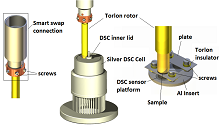
Transformations in polymers, such as polymerisation, melting/crystallization, and phase separation/remixing, are associated with changes in both rheological and thermal properties. To permit simultaneous calorimetric and rheometric measurements, the RheoDSC was developed. The RheoDSC ... Read More

The underwater electric potential (UEP) signature of naval vessels poses a severe threat as it is detectable by advanced sea mines. The signature depends also on the environment, mainly the water-seabed interface, leading in summary to the total UEP signature. The seabed has a ... Read More